
The Crisis of Perceived Truth
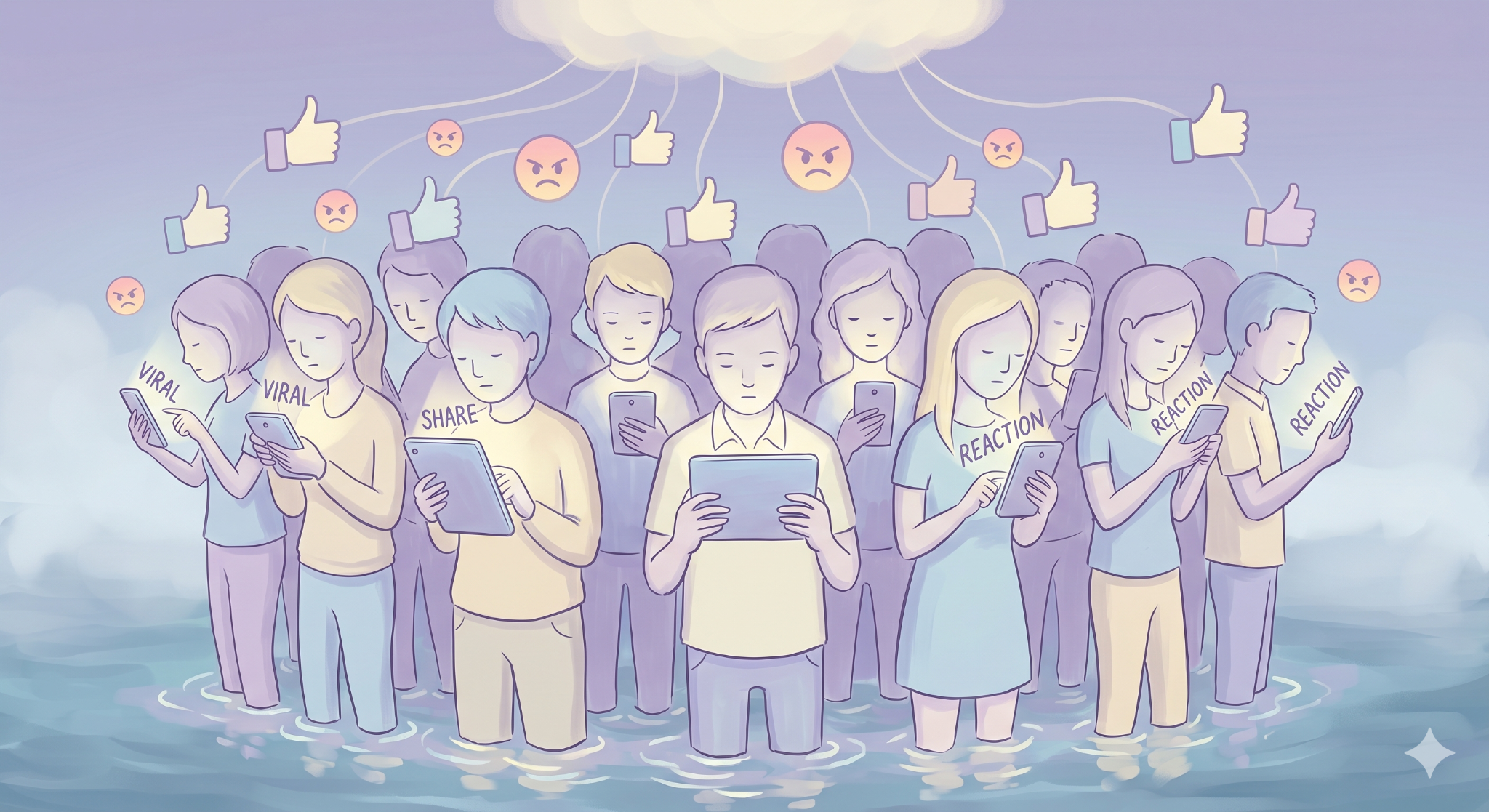
We exist in a time where technology accelerates reaction but weakens reasoning. Society is replacing truth-seeking with the consumption of perception driven by algorithms that reward emotion and virality over accuracy. And the most dangerous part? Most of us don’t even notice it’s happening.
The Core Issue: We Are Highly Informed, Yet Poorly Grounded
We have more access to information than any generation before us. And yet, we are arguably less equipped to think clearly.
Beliefs are no longer formed through analysis and evidence. They are formed through repetition and social validation. The more a narrative circulates regardless of its truth the more real it feels. We have confused familiarity with fact.
Truth has not disappeared. It has simply been drowned out by emotional stimulation. And we have willingly handed over the remote control.
2. The Death of Critical Thinking
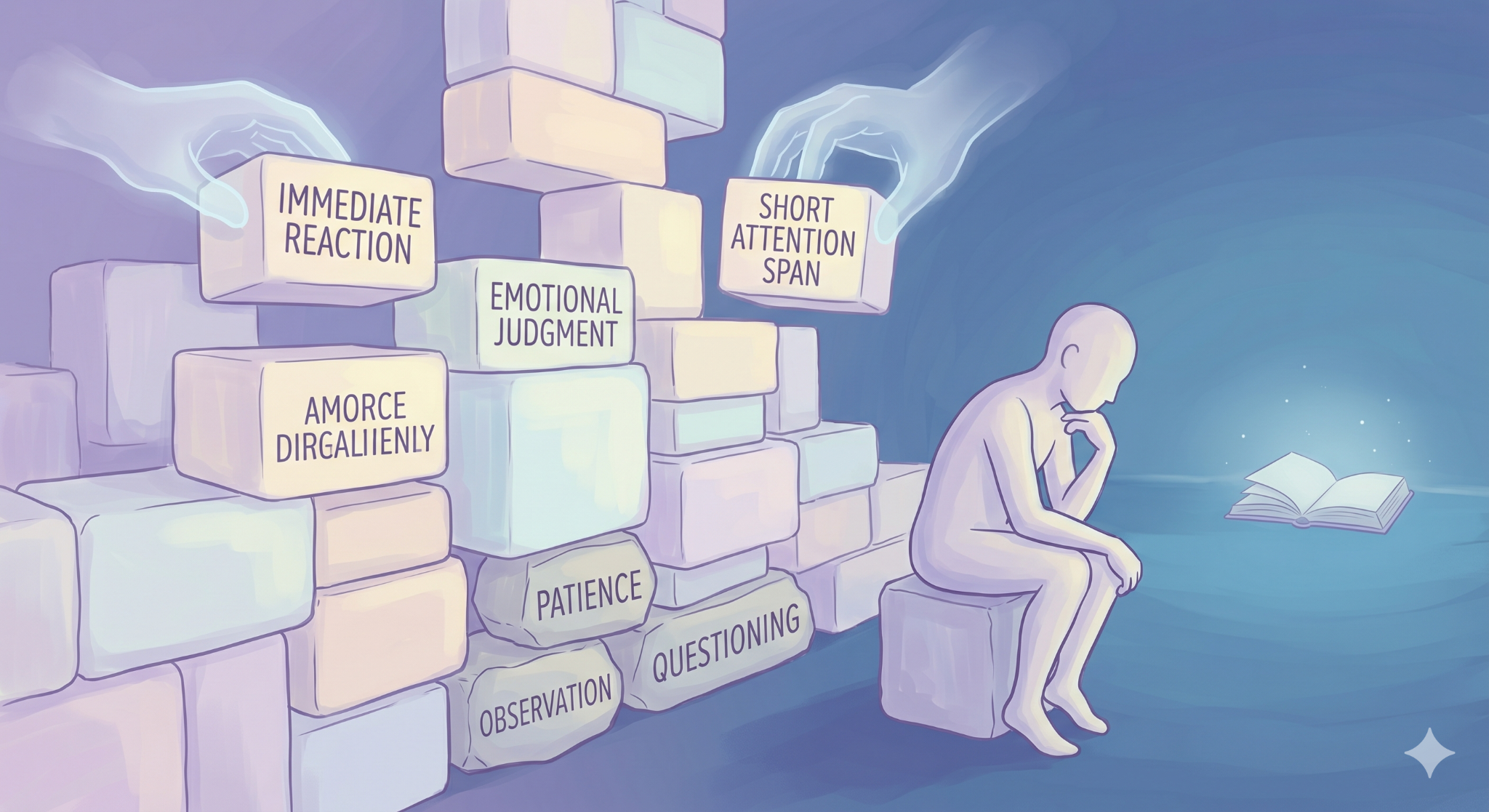
Modern systems train us for dopamine-driven consumption, short attention spans, and tribal thinking. This environment actively suppresses the discomfort and patience required for true critical thought.
Modern systems from social media feeds to entertainment platforms have been optimised to reward one thing: immediate emotional response. The result is a generation trained for dopamine-driven consumption, shrinking attention spans, and tribal thinking.
The Shift in Human Inquiry:
A society that stops analyzing becomes psychologically reactive, intellectually dependent, and easily manipulated.
Critical thought requires the opposite. It requires discomfort. It requires patience. It requires the willingness to sit with uncertainty before reaching a conclusion.
We have stopped asking:
• Is this true?
• What is the source?
• What are the long-term consequences?
And replaced those questions with:
• How does this make me feel?
• Is everyone else agreeing?
• Can I consume this quickly?
A society that stops analysing becomes psychologically reactive, intellectually dependent, and dangerously easy to manipulate.
3. The Illusion of Intelligence & Danger of Underlying Logic Left Unexamined (底层逻辑)
There is a tendency increasingly common to mistake exposure for knowledge, and confidence for competence.
Someone who has watched a hundred videos on a topic believes they understand it. Someone who speaks with certainty is assumed to know what they are talking about. But intelligence was never meant to be measured by volume of consumption or the absence of hesitation.
True intelligence is the capacity for independent thought. It is the willingness to challenge your own assumptions, not just other people’s.
What separates weak thinking from strong thinking is this:
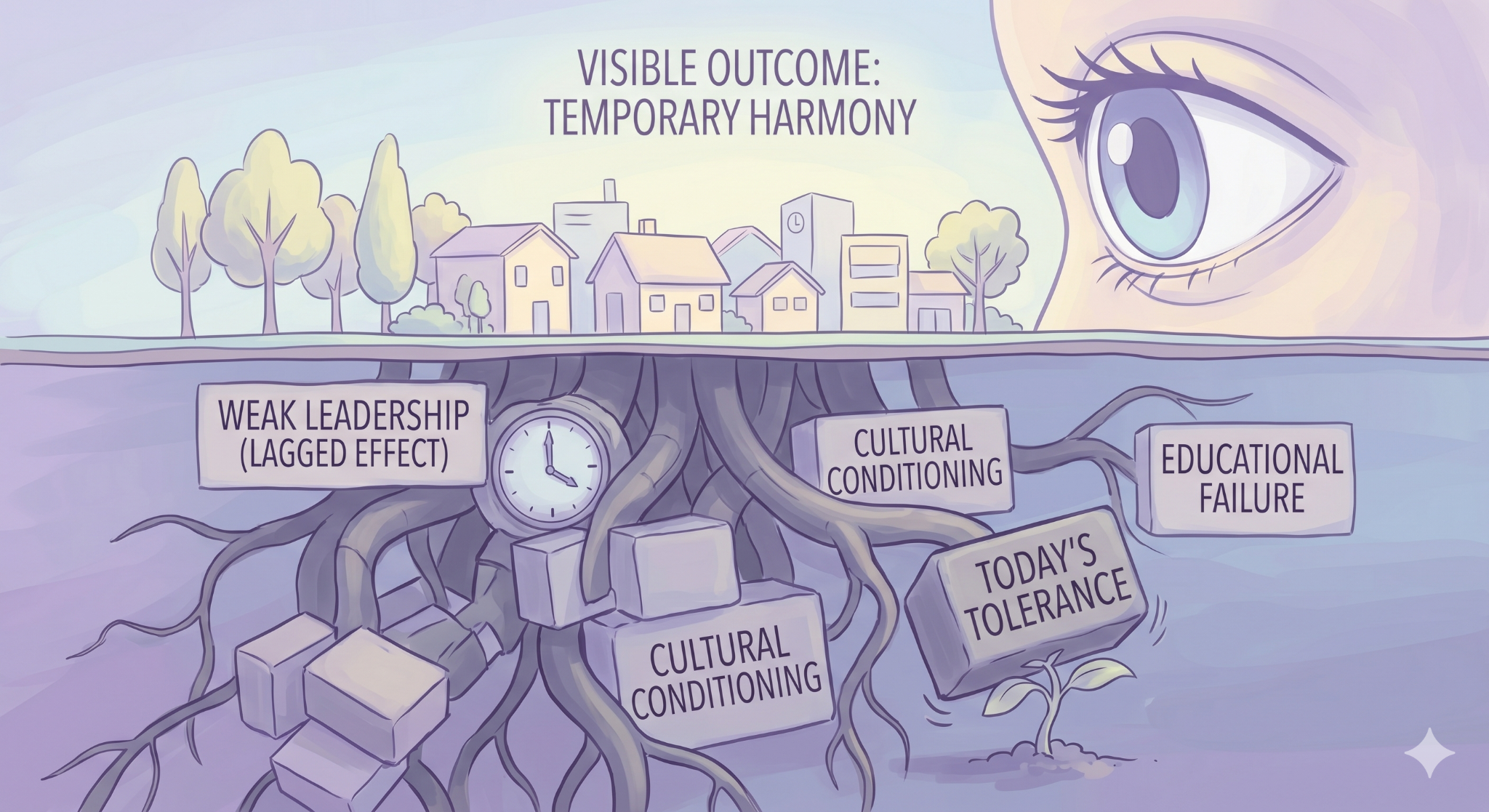
Weak minds react to symptoms. They judge what is visible: success, failure, conflict at face value.
Strong minds investigate structures. They ask what invisible systems, habits, and conditions created those visible outcomes.
Without understanding the underlying logic of a situation, we make decisions based on surface-level judgement. And surface-level judgements, compounded over time, lead to consequences we never saw coming.
4. The Lagged Effect – The Most Dangerous Blind Spot of Our Time
This is the idea I want you to sit with the longest.
Most people are trained to respond to what is directly in front of them. The immediate reaction. The visible result. The emotion of the moment. But the most consequential things in life, in organisations, in relationships, in societies do not reveal themselves immediately. They reveal themselves later. Often much later.
This is the lagged effect: the gap between when a decision is made and when its true consequence becomes visible.
And here is where it gets dangerous. When decisions are made on false assumptions — when they are based on perception rather than accuracy — the lag conceals the damage. Everything appears fine. Harmony on the surface. Confidence in the room. But underneath, the consequences are already accumulating, quietly, invisibly.
The question we rarely ask is: how accurate was the assumption this decision was built on?
Not “did it feel right?” Not “did people agree?” But was it true? Was the information accurate? Was the reasoning sound?
Because a decision made on false assumptions does not fail immediately. It fails on a delay. And by the time the failure is visible, we have often already built more decisions on top of it.
This is why learning to observe with a lag is one of the most underrated forms of intelligence. It means resisting the urge to judge outcomes too quickly. It means tracking the distance between what was assumed and what actually unfolded. It means asking, when something eventually goes wrong: what was the original perception that started this chain?
The leaders and thinkers who develop this capacity are the ones who catch problems early not because they are reactive, but because they are watching for what has not yet arrived.
5. Education and Leadership in the Age of Noise
If this crisis is philosophical rather than technological and I believe it is, then the solution must begin with how we educate and how we lead.

For education, producing academically capable students is no longer enough. Academic results are one dimension of a far more complex human being. What we must cultivate are independent thinkers; people who are morally grounded, who can distinguish between truth and algorithmic influence, and who have the intellectual courage to hold a position under pressure.
This is not idealism. This is survival. The children who learn to think clearly today are the ones who will not be manipulated tomorrow.
For leadership, the mandate is equally serious. In an age of constant noise, leaders must become guardians of clarity. Not guardians of popularity. Not managers of perception.
Great leaders pursue truth over perception. They weigh long-term consequences over public emotion. They choose responsibility over approval even when approval is the easier, safer path.
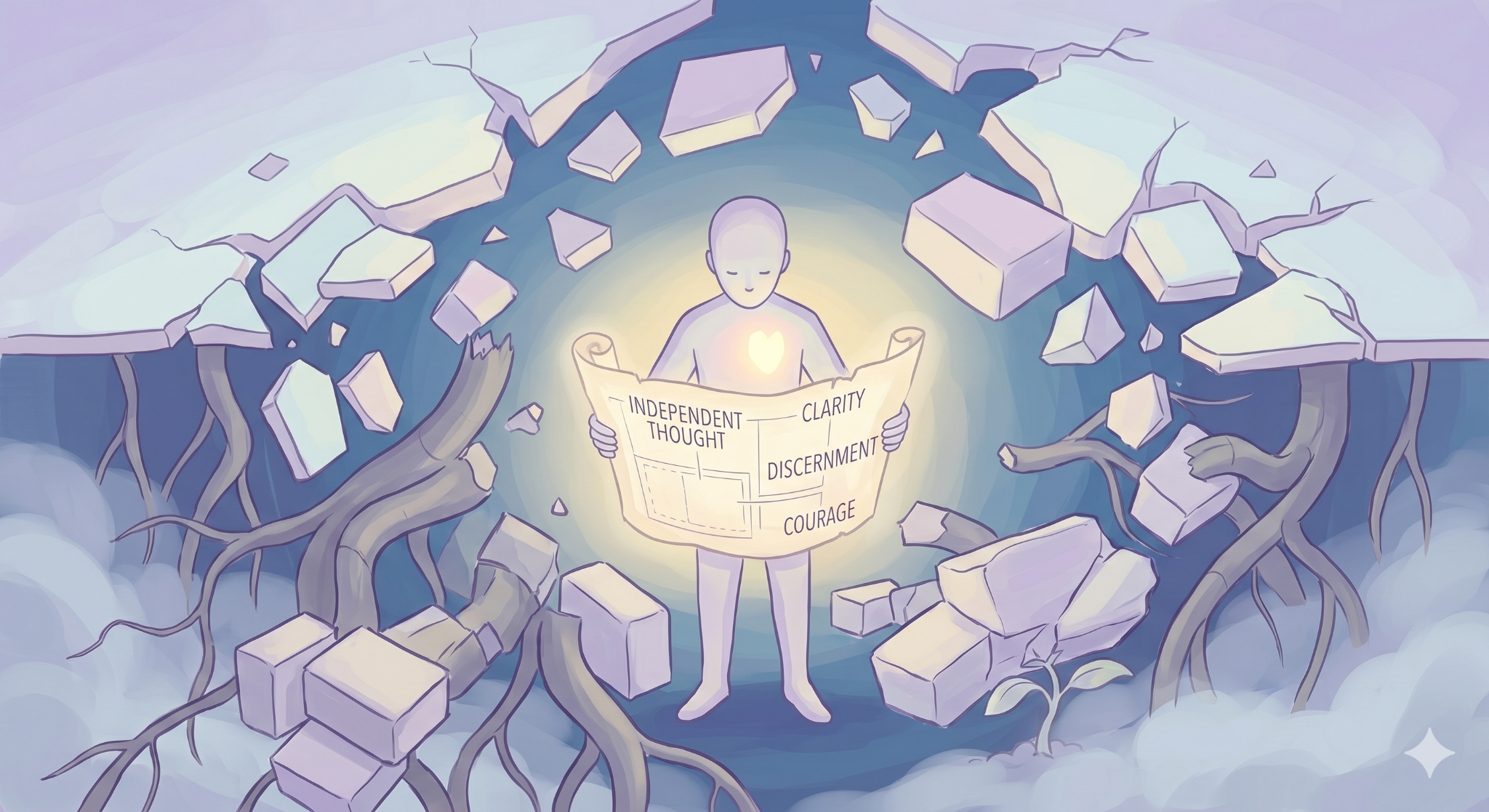
Ultimately, the rarest skills of the future will not be raw intelligence or social influence. They will be clarity, discernment, and the courage to pursue truth even when the algorithm punishes you for it.
A Question Worth Sitting WithWhich of these areas our educational systems, our leadership models, or our personal daily habits do you believe requires the most urgent intervention?

I don’t ask this rhetorically. I ask because I think the honest answer differs depending on who you are and where you stand. And that difference matters.
For me, the answer has always started at the individual level. Systems change slowly. People can change today. And one person who thinks clearly, leads with integrity, and refuses to trade truth for comfort that person changes more than most policies ever will.
What’s your answer?